
Waveshare ESP32-P4-Eth
Device Type:
Electrical Standard:
Board:
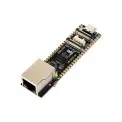
Model reference: ESP32-P4-Eth
Manufacturer: Waveshare
Product Page: esp32-p4-eth
Product Description
This product is a multimedia development board based on ESP32-P4. It features rich Human-Machine interfaces, including MIPI-CSI (with integrated Image Signal Processor), MIPI-DSI, SPI, I2S, I2C, LED PWM, MCPWM, RMT, ADC, UART, TWAI, etc. Additionally, it supports USB OTG 2.0 HS, Ethernet port and onboard 40PIN GPIO header which is compatible with some Raspberry Pi Pico HATs, enabling a wider range of application adaptability.
Key Features
- High-performance MCU with RISC-V 32-bit dual-core and single-core processors
- 128 KB HP ROM, 16 KB LP ROM, 768 KB HP L2MEM, 32 KB LP SRAM, 8 KB TCM
- Powerful image and voice processing capability. Provides image and voice processing interfaces
including
- JPEG codecs,
- Pixel Processing Accelerator (PPA),
- Image Signal Processor (ISP)
- H.264 video encoder
- 32MB PSRAM in the chip’s package, onboard 32MB Nor Flash
- Commonly used peripherals such as
- MIPI-CSI,
- MIPI-DSI,
- USB 2.0 OTG,
- Ethernet,
- SDIO 3.0 TF card slot,
- microphone,
- speaker header, etc.
- Adapting 2*20 GPIO headers with 27 x remaining programmable GPIOs
- Security features:
- Secure Boot,
- Flash Encryption,
- cryptographic accelerators,
- and TRNG.
- Additionally, hardware access protection mechanisms help to
- enable Access Permission Management and
- Privilege Separation
GPIO Pinout
Ethernet (IP101 PHY)
| Function | GPIO |
|---|---|
| MDC | GPIO31 |
| MDIO | GPIO52 |
| Power | GPIO51 |
| CLK | GPIO50 |
i2c
| Function | GPIO |
|---|---|
| sda | GPIO7 |
| scl | GPIO8 |
- frequency: 400kHz
- scan: True
i2s Audio
| Function | GPIO | Note |
|---|---|---|
| i2s_mclk_pin | GPIO13 | |
| i2s_bclk_pin | GPIO12 | |
| i2s_lrclk_pin | GPIO10 | Left/Right Clock |
| i2s_dout_pin | GPIO9 |
- use_legacy: False
Basic Configuration
Minimum configuration required for the Waveshare ESP32-P4-Eth:
esphome:  name: "esp32-p4-eth"
esp32:  board: esp32-p4-evboard  flash_size: 16MB  framework:    type: esp-idf
logger:  hardware_uart: UART0
api:
ota:  platform: esphome
Ethernet Configuration
Configuration to use the onboard 100M Ethernet with IP101 PHY:
ethernet: type: IP101 mdc_pin: GPIO31 mdio_pin: GPIO52 power_pin: GPIO51 clk: mode: CLK_EXT_IN pin: GPIO50 phy_addr: 1 # Optional manual IP# manual_ip:# static_ip: 192.168.3.187# gateway: 192.168.3.1# subnet: 255.255.255.0Complete Example with 10.1 screen
substitutions:  device_description: "ESP32-P4-Eth 10.1 Smart screen"  project_name: "WaveShare.ESP32_P4_10.1"  project_version: "1.0.1"
  lightbulb: "\U000F0335"  ceiling_light: "\U000F0769"  lamp: "\U000F06B5"  floor_lamp: "\U000F08DD"  string_lights: "\U000F12BA"

esphome:  name: esp32-p4  friendly_name: Waveshare ESP32-P4 Eth  on_boot:    - priority: -200      then:        - switch.turn_on: speaker_enable        - delay: 200ms        - audio_dac.set_volume:            id: es8311_dac            volume: 85%    - priority: 850      then:        - logger.log: Initializing display backlight        - lambda: |-            id(display_backlight_i2c).write_byte(0x95, 0x11);            id(display_backlight_i2c).write_byte(0x95, 0x17);
esp32:  board: esp32-p4-evboard  variant: esp32p4  flash_size: 16MB  cpu_frequency: 360MHZ  framework:    type: esp-idf    advanced:      enable_idf_experimental_features: yes    sdkconfig_options:      CONFIG_CAMERA_OV5647: y#    sdkconfig_options:#      CONFIG_CAMERA_CTRL_ISP_DVP_CAM_SUPPORTED: y#      CONFIG_CAMERA_CTRL_ISP_CSI_CAM_SUPPORTED: y
# needed for mipi_dsipsram:  mode: hex  speed: 200MHZ
external_components:  # For the backlight  - source: github://pr#9879    components: [mipi_dsi]    refresh: 1h
# Enable logginglogger:  level: DEBUG  hardware_uart: UART0
# Enable Home Assistant APIapi:  encryption:    key: "<REPLACE KEY>"
ota:  - platform: esphome    password: "<REPLACE PASSWORD>"# Example configuration entryweb_server:  port: 80
ethernet:  type: IP101  mdc_pin: GPIO31  mdio_pin: GPIO52  power_pin: GPIO51  clk:    mode: CLK_EXT_IN    pin: GPIO50  phy_addr: 1  # Optional manual IP#  manual_ip:#    static_ip: 192.168.3.187#    gateway: 192.168.3.1#    subnet: 255.255.255.0
time:  - platform: homeassistant    id: time_comp    on_time_sync:      - script.execute: time_update    on_time:      - minutes: '*'        seconds: 0        then:          - script.execute: time_update
script:  - id: time_update    then:      - lvgl.indicator.update:          id: minute_hand          value: !lambda |-            return id(time_comp).now().minute;      - lvgl.indicator.update:          id: hour_hand          value: !lambda |-            auto now = id(time_comp).now();            return std::fmod(now.hour, 12) * 60 + now.minute;      - lvgl.label.update:          id: date_label          text: !lambda |-            static const char * const mon_names[] = {"JAN", "FEB", "MAR", "APR", "MAY", "JUN", "JUL", "AUG", "SEP", "OCT", "NOV", "DEC"};            static char date_buf[8];            auto now = id(time_comp).now();            snprintf(date_buf, sizeof(date_buf), "%s %2d", mon_names[now.month-1], now.day_of_month);            return date_buf;      - lvgl.label.update:          id: day_label          text: !lambda |-            static const char * const day_names[] = {"SUN", "MON", "TUE", "WED", "THU", "FRI", "SAT"};            return day_names[id(time_comp).now().day_of_week - 1];
esp_ldo:  - channel: 3    id: display_supply_ldo    voltage: 2.5V
# Needed for gt911 touchscreeni2c:  sda: GPIO7  scl: GPIO8  frequency: 400kHz  scan: True
i2c_device:  - address: 0x45    id: display_backlight_i2c
audio_dac:  - platform: es8311    id: es8311_dac    bits_per_sample: 16bit    address: 0x18    sample_rate: 16000    use_mclk: True    use_microphone: False    mic_gain: 42DB
microphone:  - platform: i2s_audio    id: i2s_microphone    adc_type: external    i2s_din_pin: GPIO11    bits_per_channel: default
sensor:  # https://esphome.io/components/sensor/sound_level/  - platform: sound_level    id: sound_level_id    passive: True    microphone:      microphone: i2s_microphone      channels: 1    peak:      name: "Peak Loudness"    rms:      name: "Average Loudness"
text_sensor:  - platform: ethernet_info    ip_address:      name: "IP Address"      id: ip_address      entity_category: diagnostic      on_value:        then:          - lvgl.label.update:              id: ip_address_label              text:                format: "%s"                args: [ 'id(ip_address).get_state().c_str()' ]      address_0:        name: device IP Address 0      address_1:        name: device IP Address 1      address_2:        name: device IP Address 2      address_3:        name: device IP Address 3      address_4:        name: device IP Address 4    mac_address:      name: device Mac Ethernet Address    dns_address:      name: device DNS Address
i2s_audio:  - id: i2s_output    i2s_mclk_pin: GPIO13    i2s_bclk_pin: GPIO12    # i2s_comm_fmt:    # ASDOUT: GPIO11    i2s_lrclk_pin: GPIO10 # Left/Right Clock    # DSDIN: GPIO9    use_legacy: False
speaker:  - platform: i2s_audio    id: i2s_speaker    dac_type: external    channel: mono    i2s_audio_id: i2s_output    audio_dac: es8311_dac    i2s_dout_pin: GPIO9    num_channels: 1    buffer_duration: 300ms    sample_rate: 16000    bits_per_sample: 16bit  - platform: mixer    id: mixer_speaker_id    output_speaker: i2s_speaker    source_speakers:      - id: announcement_spk_mixer_input      - id: media_spk_mixer_input  - platform: resampler    id: media_spk_resampling_input    output_speaker: media_spk_mixer_input  - platform: resampler    id: announcement_spk_resampling_input    output_speaker: announcement_spk_mixer_input
media_player:  - platform: speaker    name: "Speaker Media Player"    id: speaker_media_player_id    buffer_size: 500000    media_pipeline:        speaker: media_spk_resampling_input        num_channels: 1    announcement_pipeline:        speaker: announcement_spk_resampling_input        num_channels: 1    codec_support_enabled: true    files:      - id: alarm_sound        file: hardknocklife.flac # Placed in the yaml directory.            #Should be encoded with a 48000 Hz sample rate,            # mono or stereo audio,            # and 16 bits per sample.
switch:  - platform: gpio    name: "Speaker Enable"    id: speaker_enable    internal: False    pin: GPIO53    restore_mode: ALWAYS_ON # RESTORE_DEFAULT_ON  - platform: template    name: "Mic detect"    id: mic_detect    optimistic: true    restore_mode: ALWAYS_OFF    on_turn_off:      sound_level.stop: sound_level_id    on_turn_on:      sound_level.start: sound_level_id  - platform: template    name: "Ring Timer"    id: timer_ringing    optimistic: true    restore_mode: ALWAYS_OFF    on_turn_off:        # Stop playing the alarm        - media_player.stop:            announcement: true        - mixer_speaker.apply_ducking:  # Stop ducking the media stream over 2 seconds            id: media_spk_mixer_input            decibel_reduction: 0            duration: 2.0s
    on_turn_on:        # Duck media audio by 20 decibels instantly        - mixer_speaker.apply_ducking:            id: media_spk_mixer_input            decibel_reduction: 20            duration: 0.0s        - while:            condition:                switch.is_on: timer_ringing            then:                # Play the alarm sound as an announcement                - media_player.speaker.play_on_device_media_file:                    media_file: alarm_sound                    announcement: true                # Wait until the alarm sound starts playing                - wait_until:                    media_player.is_announcing:                # Wait until the alarm sound stops playing                - wait_until:                    not:                      media_player.is_announcing:
# needs github://pr#9879 until merged to mainlight:  - platform: mipi_dsi    id: backlight    pwm_register: 0x96    restore_mode: ALWAYS_ON
display:  - platform: mipi_dsi    id: tenone_display    model: WAVESHARE-P4-NANO-10.1    rotation: 270    show_test_card: true#    update_interval: never

touchscreen:  - platform: gt911    id: tenone_touchscreen    transform:      swap_xy: true      mirror_y: false      mirror_x: true    on_touch:      - logger.log:          format: Touch at (%d, %d)          args: [touch.x, touch.y]      - lambda: |-          ESP_LOGI("cal", "x=%d, y=%d, x_raw=%d, y_raw=%0d",              touch.x,              touch.y,              touch.x_raw,              touch.y_raw              );lvgl:    displays:      - tenone_display    on_idle:      - timeout: 30s        then:          - logger.log: idle timeout          - if:              condition:                lvgl.is_idle:                  timeout: 5s              then:                - logger.log: LVGL is idle      - timeout: 35s        then:          - logger.log: idle 15s timeout          - light.turn_off:              id: backlight              transition_length: 5s          - lvgl.pause:              show_snow: true    color_depth: 16    buffer_size: 100%    byte_order: little_endian    style_definitions:      - id: style_line        line_color: 0x0000FF        line_width: 8        line_rounded: true      - id: date_style        text_font: roboto24        align: center        text_color: 0x333333        bg_opa: cover        radius: 4        pad_all: 2    pages:      - id: main_page        skip: false        layout:          type: flex          flex_flow: column_wrap        width: 100%        bg_color: 0x000000        bg_opa: cover        pad_all: 5        widgets:          - button:              height: 120              checkable: true              id: lv_button_1              widgets:                - label:                    text_font: light40                    align: top_left                    text: $lightbulb                    id: lv_button_1_icon                - label:                    align: bottom_left                    text: "Office Light"                    long_mode: dot              on_click:                light.toggle: backlight              on_short_click:                  - homeassistant.service:                      service: switch.toggle                      data:                        entity_id: switch.office_lights          - button:              height: 120              checkable: true              id: lv_button_2              widgets:                - label:                    text_font: light40                    align: top_left                    text: $lightbulb                    id: lv_button_2_icon                - label:                    align: bottom_left                    text: "Play Sound"                    long_mode: dot              on_click:                switch.toggle: timer_ringing              on_short_click:                  - switch.toggle: timer_ringing          - obj:              widgets:              - label:                  id: ip_address_label                  align: CENTER                  text: 'Not connected'                  text_color: ha_blue                  y: +10          - obj:              width: 240              widgets:              - label:                  align: CENTER                  text: 'backlight'                  text_color: ha_blue                  y: +10              - slider:                    id: dimmer_slider                    align: CENTER                    # x: 20                    y: +10                    width: 200                    height: 30                    pad_all: 8                    min_value: 100                    max_value: 255                    on_value:                      - light.turn_on:                          id: backlight                          #transition_length: 0.5s                          brightness: !lambda return int(x)/255.0;          - obj:              width: 230              height: 230              widgets:              - meter:                  height: 200                  width: 200                  align: center                  #widgets:

                  bg_opa: TRANSP                  text_color: 0xFFFFFF                  scales:                    - ticks:                        width: 1                        count: 61                        length: 10                        color: 0xFFFFFF                      range_from: 0                      range_to: 60                      angle_range: 360                      rotation: 270                      indicators:                        - line:                            id: minute_hand                            value: !lambda |-                              return id(time_comp).now().minute;                            width: 3                            color: 0xE0E0E0                            r_mod: -1
                    -                      angle_range: 330                      rotation: 300                      range_from: 1                      range_to: 12                      ticks:                        width: 1                        count: 12                        length: 1                        major:                          stride: 1                          width: 4                          length: 8                          color: 0xC0C0C0                          label_gap: 6
                    - angle_range: 360                      rotation: 270                      range_from: 0                      range_to: 720                      indicators:                        - line:                            id: hour_hand                            value: !lambda |-                              auto now = id(time_comp).now();                              return std::fmod(now.hour, 12) * 60 + now.minute;                            width: 4                            color: 0xA0A0A0                            r_mod: -20              - label:                  styles: date_style                  id: day_label                  #y: -20                  text: !lambda |-                    static const char * const day_names[] = {"SUN", "MON", "TUE", "WED", "THU", "FRI", "SAT"};                    return day_names[id(time_comp).now().day_of_week-1];              - label:                  styles: date_style                  id: date_label                  #y: +20                  text: !lambda |-                    static const char * const mon_names[] = {"JAN", "FEB", "MAR", "APR", "MAY", "JUN", "JUL", "AUG", "SEP", "OCT", "NOV", "DEC"};                    static char date_buf[8];                    auto now = id(time_comp).now();                    snprintf(date_buf, sizeof(date_buf), "%s %2d", mon_names[now.month-1], now.day_of_month);                    return date_buf;      - id: etusivu        widgets:          - obj:              x: 30              y: 350              width: 450              height: 200              bg_color: 0x000000              border_width: 2#-------------------------------------------# Graphics and Fonts#-------------------------------------------font:  - file: "gfonts://Roboto"    id: roboto24    size: 24    bpp: 4    extras:      # https://cdnjs.cloudflare.com/ajax/libs/MaterialDesign-Webfont/7.4.47/fonts/materialdesignicons-webfont.ttf      - file: "fonts/materialdesignicons-webfont.ttf" # http://materialdesignicons.com/cdn/7.4.47/        glyphs:          [            "\U000F004B",            "\U000F006E",            "\U000F012C",            "\U000F179B",            "\U000F0748",            "\U000F1A1B",            "\U000F02DC",            "\U000F0A02",            "\U000F035F",            "\U000F0156",            "\U000F0C5F",            "\U000f0084",            "\U000f0091",          ]
  - file: "fonts/materialdesignicons-webfont.ttf" # http://materialdesignicons.com/cdn/7.4.47/    id: light40    size: 40    bpp: 4    glyphs: [        "\U000F0335", # mdi-lightbulb        "\U000F0769", # mdi-ceiling-light        "\U000F06B5", # mdi-lamp        "\U000F08DD", # mdi-floor-lamp        "\U000F12BA", # mdi-string-lights      ]color:  # Create a Home Assistant blue color  - id: ha_blue    hex: 51c0f2